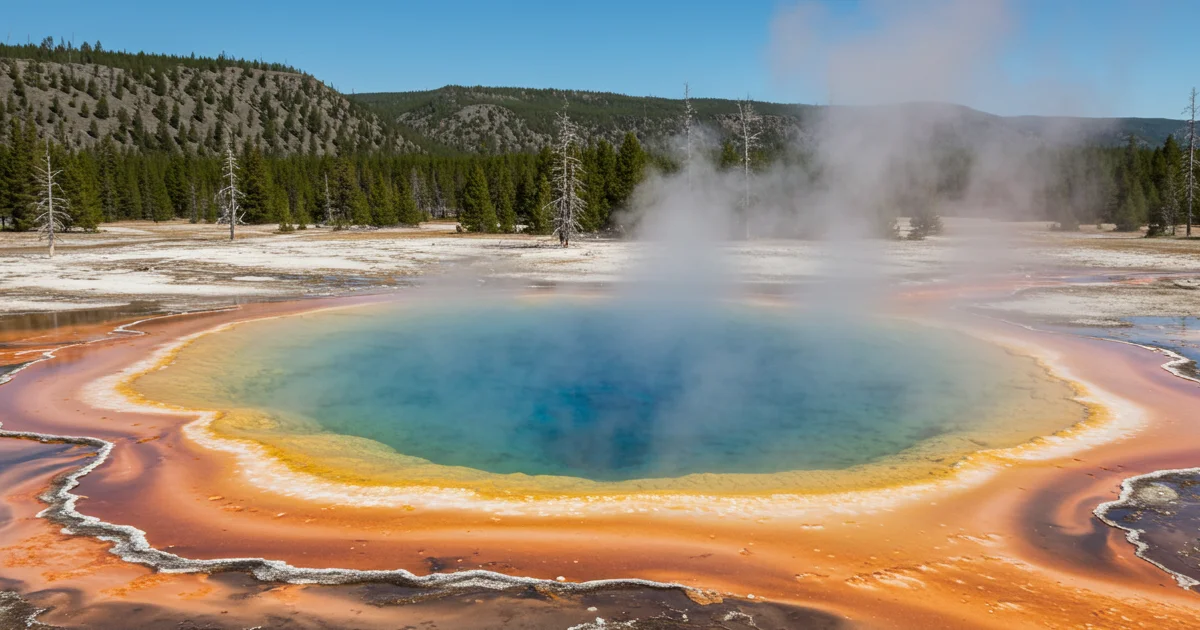
Yellowstone National Park: A Geothermal Wonderland
Yellowstone National Park, established in 1872, is renowned for its unparalleled geothermal activity, hosting over half of the world's active geysers and more than 10,000 other geothermal features, including hot springs, mud pots, and fumaroles. The park sits atop the Yellowstone Caldera, one of the world's largest active supervolcanoes, which fuels these spectacular displays. Iconic features like Old Faithful, a cone geyser that erupts approximately every 60 to 110 minutes, and the Grand Prismatic Spring, with its vibrant microbial mats, showcase the park's dynamic geological processes and unique hydrothermal landscapes.
Beyond its geological marvels, Yellowstone holds immense historical and ecological significance as the world's first national park, setting a precedent for protected areas globally. Its vast wilderness spans nearly 9,000 square kilometers, encompassing diverse ecosystems from subalpine forests to expansive grasslands. This rich habitat supports an extraordinary array of wildlife, including the largest free-roaming herd of bison in North America, grizzly bears, wolves, elk, and moose, making it a critical stronghold for biodiversity and a living laboratory for ecological research and conservation efforts.
Attributes
| Year Inscribed | 1978 |
|---|---|
| Property Area | 898349 ha |
| Buffer Zone | 0 ha |
| UNESCO ID | 28 |
| Category Type | Natural |
| Primary Material | Rhyolite & Basaltic Rock |
| Epoch Origin | Modern Era Conservation (1872) |
| Conservation Status | Excellent |
| Annual Visitors | 4 million |