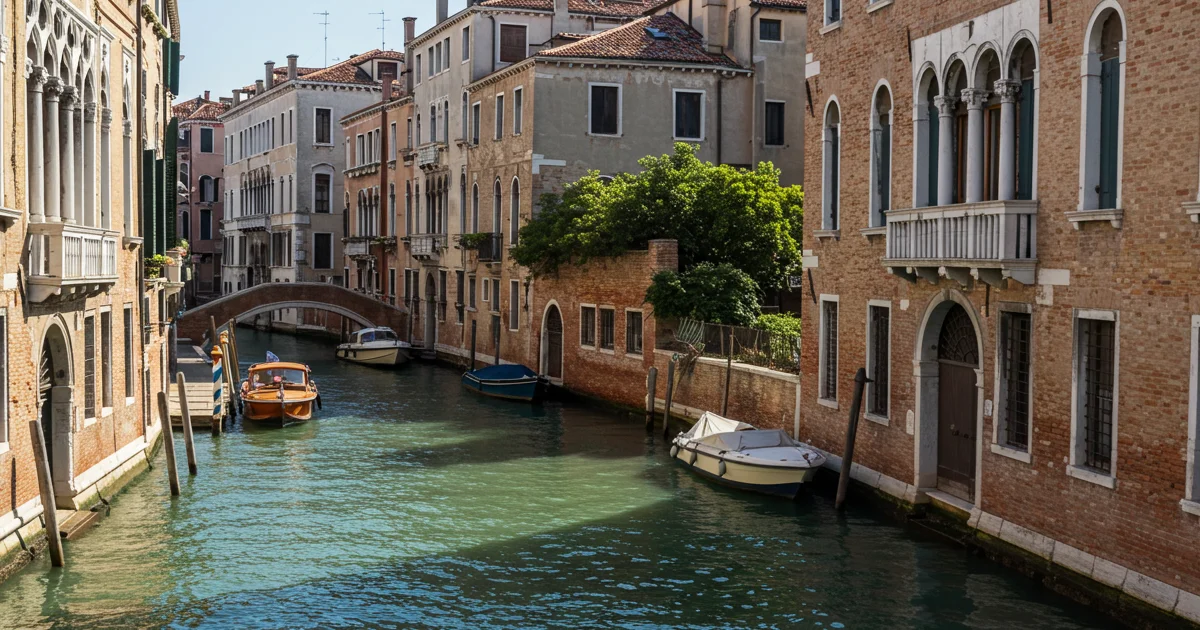
The City of Canals
Venice, a city built on 118 small islands within a shallow lagoon, is an unparalleled example of urban development adapted to a complex natural environment. Its intricate network comprises over 170 canals, including the Grand Canal, and more than 400 bridges, such as the iconic Rialto Bridge and Bridge of Sighs, connecting its various sestieri. The city's architecture showcases a rich blend of Byzantine, Gothic, and Renaissance styles, evident in masterpieces like St. Mark's Basilica with its opulent mosaics and the Doge's Palace, a stunning example of Venetian Gothic, both dominating Piazza San Marco.
Historically, Venice rose to prominence as a major maritime power and a crucial hub for trade between Western Europe and the East from the 10th to the 18th centuries, fostering a unique cultural and artistic legacy. This period saw the flourishing of Venetian painting, music, and craftsmanship, leaving an indelible mark on global heritage. Today, the city faces significant challenges, including the impact of mass tourism and the existential threat of rising sea levels, making its preservation a critical global concern for its unique historical and architectural integrity.
Attributes
| Year Inscribed | 1987 |
|---|---|
| Property Area | 70176 ha |
| Buffer Zone | 0 ha |
| UNESCO ID | 394 |
| Category Type | Cultural |
| Primary Material | Brick & Istrian Stone |
| Epoch Origin | Byzantine & Middle Ages (5th C.) |
| Conservation Status | Active Monitoring |
| Annual Visitors | 28 million |