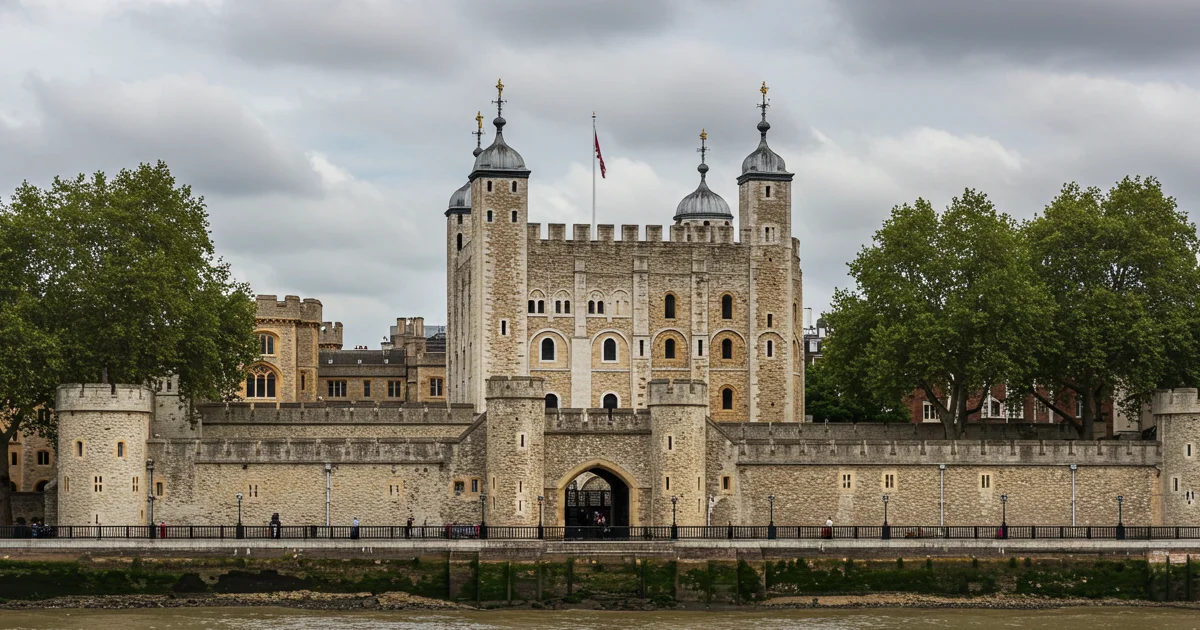
Citadel of Royal Might
The White Tower, the iconic central keep, measures approximately 36 meters (118 ft) by 32 meters (105 ft) at its base and rises to a height of 27 meters (89 ft) at its battlements. Constructed primarily from Kentish Ragstone and Caen stone imported from France, its walls are up to 4.6 meters (15 ft) thick at the base. This formidable structure, completed around 1080, served as a royal residence, a powerful fortress, and a symbol of Norman dominance, establishing a new standard for military architecture in England.
Beyond the White Tower, the complex encompasses several concentric rings of defensive walls and towers, including the infamous Traitors' Gate, through which prisoners entered, and the Bloody Tower, associated with the disappearance of the Princes in the Tower. Today, the Tower houses the Crown Jewels in the Jewel House, guarded by the Yeoman Warders, and functions as a living museum. Its rich history as a royal palace, prison, and place of execution, coupled with its architectural significance, earned it UNESCO World Heritage status in 1988.
Attributes
| Year Inscribed | 1988 |
|---|---|
| Property Area | 6 ha |
| Buffer Zone | 143 ha |
| UNESCO ID | 488 |
| Category Type | Cultural |
| Primary Material | Kentish Ragstone |
| Epoch Origin | Norman Conquest (11th C.) |
| Conservation Status | Excellent |
| Annual Visitors | 2.8 million |