The Jewel of Indo-Islamic Art
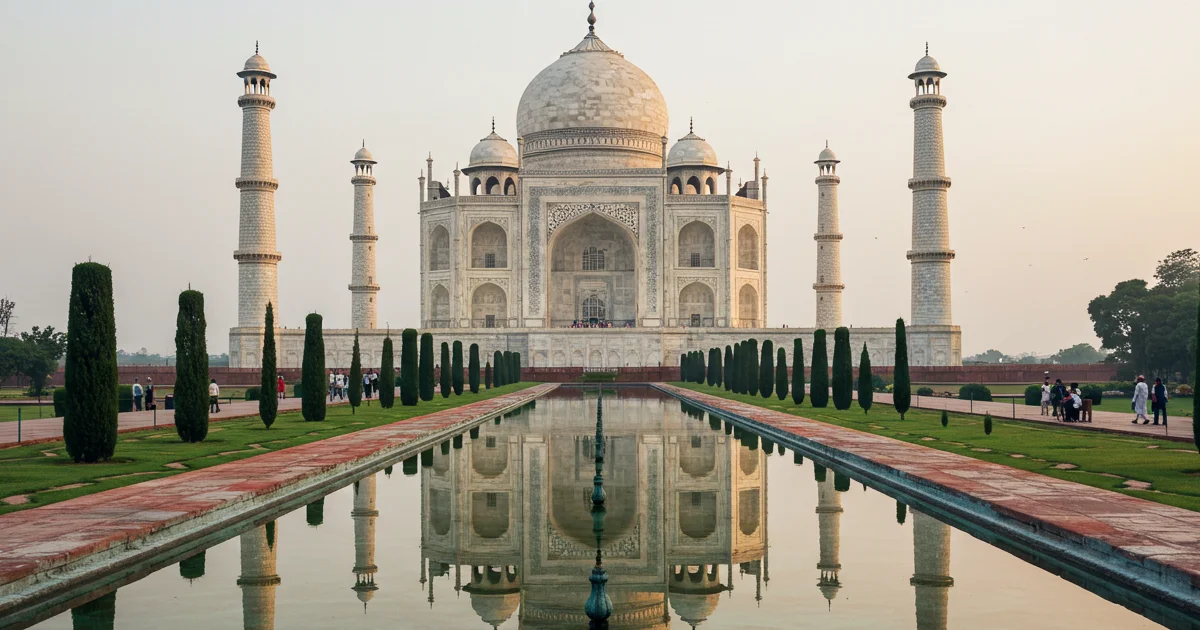
The Taj Mahal, an immense mausoleum of white marble, stands majestically on the right bank of the Yamuna River in Agra, Uttar Pradesh. Commissioned in 1632 by the Mughal emperor Shah Jahan to house the tomb of his beloved wife, Mumtaz Mahal, the complex took approximately 22 years to complete, employing thousands of artisans and craftsmen. Its central dome rises to about 73 meters (240 feet), flanked by four slender minarets, each approximately 40 meters (130 feet) tall, designed to lean slightly outwards to protect the main tomb in case of an earthquake. The entire structure is renowned for its perfect symmetry, intricate pietra dura inlay work using 28 types of precious and semi-precious stones, and calligraphic panels.
Beyond its architectural grandeur, the Taj Mahal is a profound symbol of eternal love and a pinnacle of Mughal artistry, blending Persian, Islamic, and Indian architectural styles. Inscribed as a UNESCO World Heritage site in 1983, it is considered one of the New7Wonders of the World and attracts millions of visitors annually, drawn by its breathtaking beauty and poignant history. The complex also includes a mosque, a guest house, and extensive formal gardens (charbagh) that reflect the Islamic concept of paradise, all meticulously planned to create a harmonious and spiritually uplifting environment.
Attributes
| Year Inscribed | 1983 |
|---|---|
| Property Area | 17 ha |
| Buffer Zone | 352 ha |
| UNESCO ID | 252 |
| Category Type | Cultural |
| Primary Material | Polished White Marble |
| Epoch Origin | Mughal Era (17th C.) |
| Conservation Status | Excellent |
| Annual Visitors | 7.5 million |