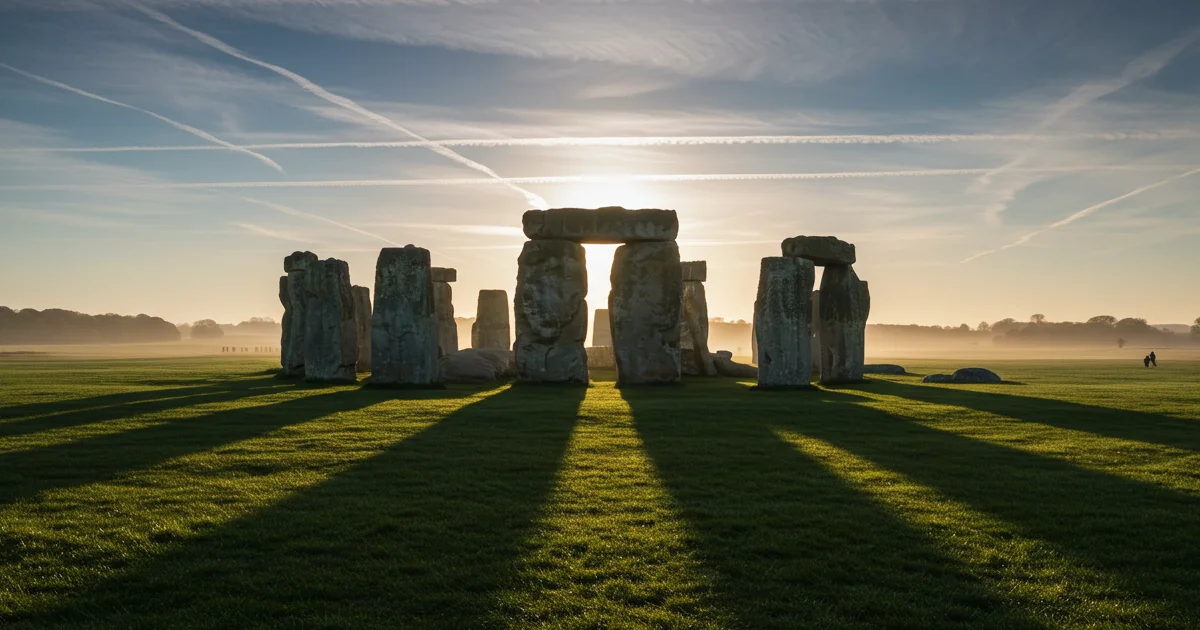
Prehistoric Sanctuary
Stonehenge, Avebury and Associated Sites represent a monumental achievement of prehistoric engineering and ritual landscape design in Wiltshire, England. Stonehenge, constructed primarily between 3000 and 2000 BCE, features massive sarsen stones, some weighing up to 25 tons and standing over 4 meters tall, arranged in a sophisticated concentric pattern. The smaller bluestones, transported over 200 kilometers from Wales, add to the site's enigmatic construction. Avebury, a larger and earlier henge monument, encompasses an entire village within its vast earthwork bank and ditch, encircling an outer stone circle approximately 335 meters in diameter, with two smaller inner circles.
These sites are crucial for understanding the social, spiritual, and technological advancements of Neolithic and Bronze Age societies. Stonehenge is renowned for its precise astronomical alignments, particularly with the summer solstice sunrise and winter solstice sunset, suggesting its use as a sophisticated calendar or ceremonial center. Avebury, with its grand scale and complex arrangement of stones and earthworks, likely served as a major ritualistic and communal gathering place. Together, these sites provide unparalleled evidence of prehistoric belief systems, funerary practices, and the organized labor required to create such enduring monuments, reflecting a profound connection between early human communities and the cosmos.
Attributes
| Year Inscribed | 1986 |
|---|---|
| Property Area | 4985 ha |
| Buffer Zone | 0 ha |
| UNESCO ID | 373 |
| Category Type | Cultural |
| Primary Material | Sarsen & Bluestone |
| Epoch Origin | Neolithic Period (30th C. BCE) |
| Conservation Status | Active Monitoring |
| Annual Visitors | 1.6 million |