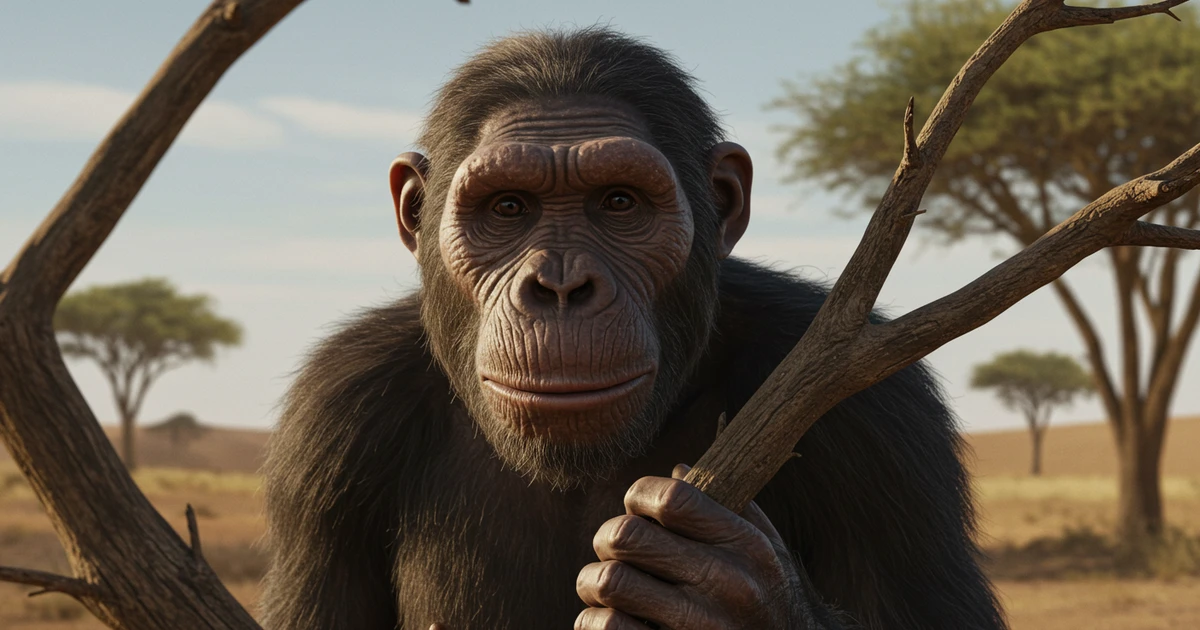
An Ancient Enigma
Sahelanthropus tchadensis represents a pivotal, yet enigmatic, chapter in human evolution. Discovered in the Djurab Desert of Chad by a team led by French paleontologist Michel Brunet in 2001, the species is primarily known from a single, nearly complete cranium nicknamed "Toumaï" (Hope of Life). Dated to the late Miocene epoch, approximately 7 to 6 million years ago, Toumaï exhibits a fascinating mosaic of primitive and derived traits. Its cranial capacity is small, around 350 cubic centimeters, similar to that of a modern chimpanzee. However, its facial structure is flatter than that of other Miocene apes, and its canines are small and non-honed. Most significantly, the foramen magnum—the opening where the spinal cord exits the skull—is positioned anteriorly, strongly suggesting that Sahelanthropus habitually held its head upright and was capable of bipedal locomotion.
Attributes
| Year Discovered | 2001 |
|---|---|
| Cranial Capacity | 320 cc |
| Estimated Stature | 1 m |
| Type Specimen | TM 266-01-060-1 (Toumaï) |
| Evolutionary Group | Early Hominin |
| Associated Tools | None |
| Chronological Range | 7.0 - 6.0 Mya Mya |
| Extinction Context | Represents a population near the human-chimpanzee split; likely evolved into or was outcompeted by subsequent lineages. |
| Fossil Abundance | Extremely rare; primarily a single cranium and jaw fragments. |