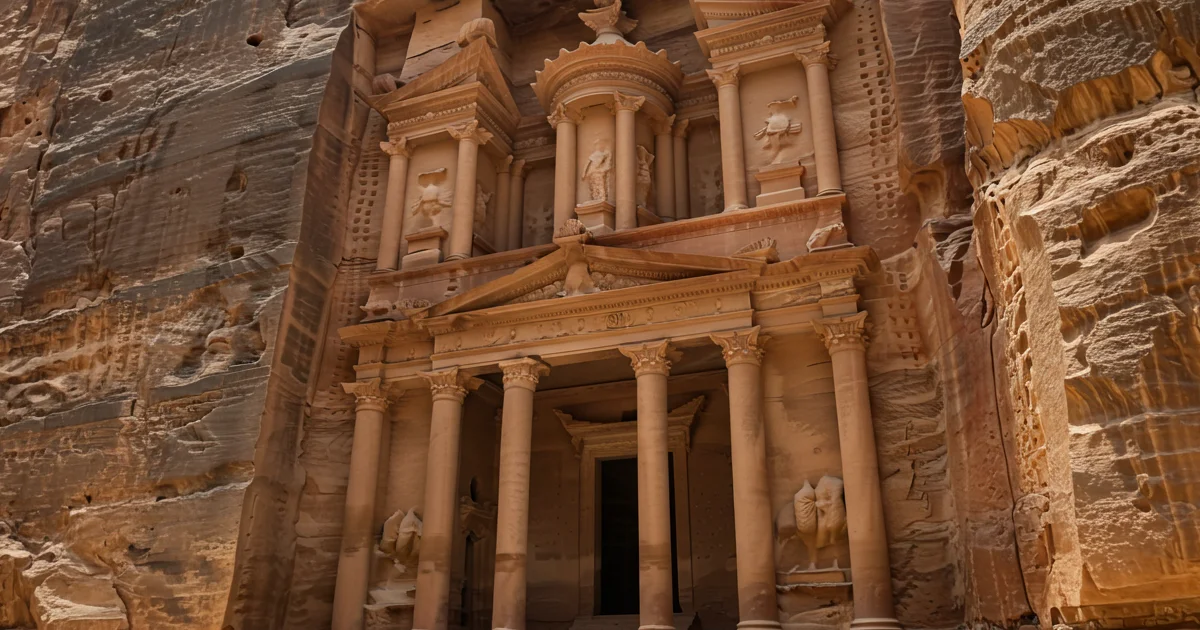
The Rose City of Petra
Petra, the ancient capital of the Nabataean Kingdom, is renowned for its unique rock-cut architecture and sophisticated water management system, seamlessly integrated into the vibrant red sandstone cliffs of southern Jordan. The city's entrance, the Siq, is a narrow, winding gorge that dramatically opens to reveal Al-Khazneh, "The Treasury," a monumental facade carved directly into the rock face, standing approximately 40 meters high and 25 meters wide. This iconic structure, believed to be a mausoleum or temple, exemplifies the Hellenistic architectural influences blended with traditional Nabataean artistry, showcasing intricate carvings and a grand scale that served as a powerful symbol of Nabataean wealth and engineering prowess.
Beyond the Treasury, Petra encompasses a vast archaeological landscape featuring hundreds of tombs, temples, and dwellings, all carved from the living rock. Key structures include the Ad Deir, "The Monastery," an even larger facade located high in the mountains, and the Royal Tombs, a series of impressive burial places like the Urn Tomb and the Corinthian Tomb. The city also boasts a large Roman-style theatre capable of seating 8,500 spectators, demonstrating the later Roman influence. Petra's strategic location along ancient trade routes, connecting Arabia, Egypt, and the Levant, allowed it to flourish as a vital commercial and cultural center from the 4th century BCE until its decline after the 4th century CE.
Attributes
| Year Inscribed | 1985 |
|---|---|
| Property Area | 26171 ha |
| Buffer Zone | 0 ha |
| UNESCO ID | 326 |
| Category Type | Cultural |
| Primary Material | Carved Red Sandstone |
| Epoch Origin | Nabataean Kingdom (4th C. BCE) |
| Conservation Status | Active Monitoring |
| Annual Visitors | 1.1 million |