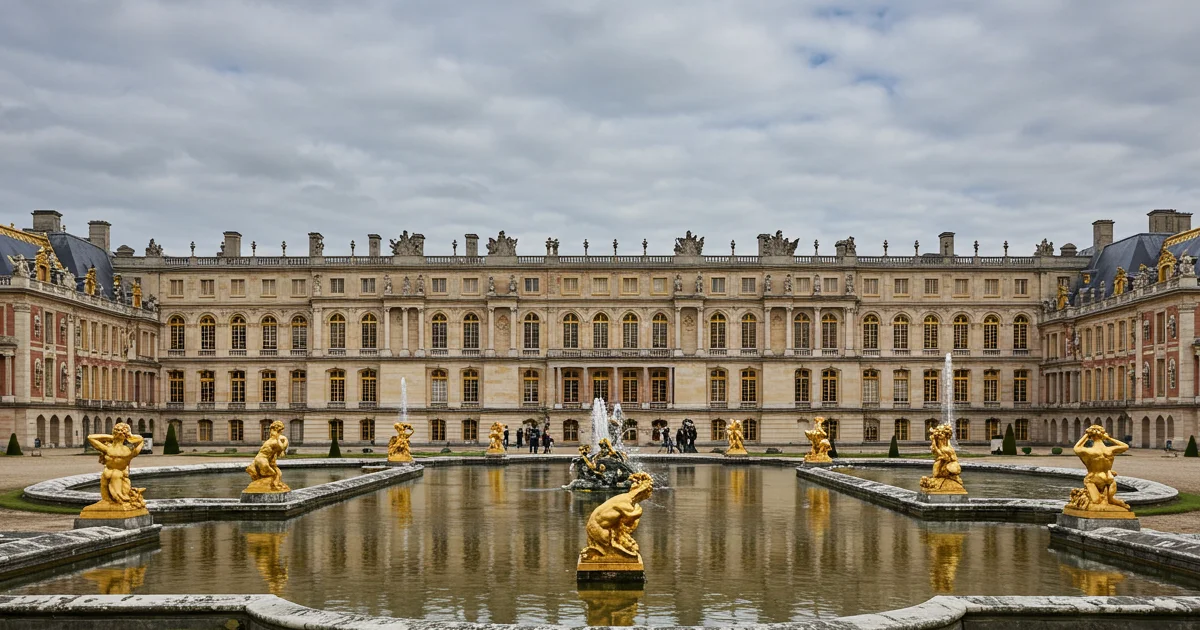
The Seat of the Sun King
The Palace of Versailles, a quintessential example of French Baroque architecture, served as the principal royal residence of France from 1682, under Louis XIV, until the start of the French Revolution in 1789. Its design, spearheaded by architects Louis Le Vau and Jules Hardouin-Mansart, and landscape architect André Le Nôtre, meticulously integrates the opulent Hall of Mirrors, adorned with 17 large arched windows and 357 mirrors, with vast, geometrically aligned gardens. This monumental estate was conceived to project the absolute power and grandeur of the French monarchy, transforming a former hunting lodge into a symbol of political and cultural dominance.
Beyond the main palace, the estate encompasses several other significant structures, including the Royal Chapel, a masterpiece of Baroque religious architecture, and the Grand and Petit Trianons, which offered more intimate royal retreats. The King's and Queen's State Apartments, lavishly decorated with gilded carvings, frescoes, and rich textiles, illustrate the daily life and ceremonial functions of the court. Versailles' enduring legacy lies not only in its architectural and artistic achievements but also in its profound influence on European court life and palace design, establishing a model for royal residences across the continent.
Attributes
| Year Inscribed | 1979 |
|---|---|
| Property Area | 1070 ha |
| Buffer Zone | 9475 ha |
| UNESCO ID | 83 |
| Category Type | Cultural |
| Primary Material | Cut Limestone & Gold Leaf |
| Epoch Origin | Ancien Régime (17th C.) |
| Conservation Status | Excellent |
| Annual Visitors | 7.7 million |