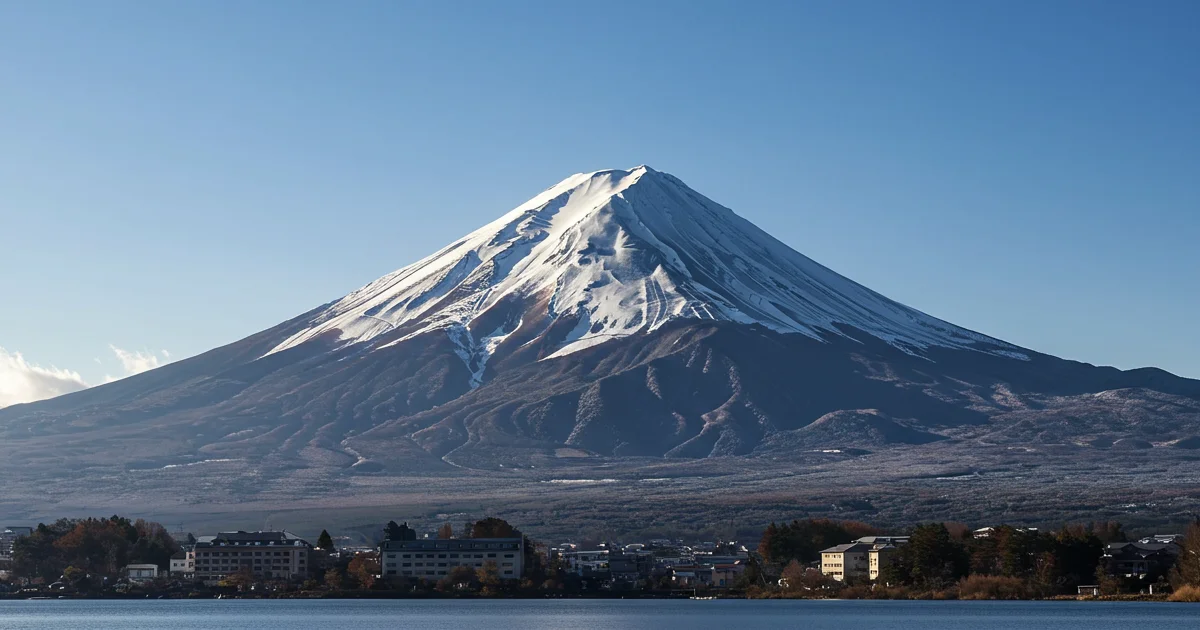
Sacred Peak of Artistic Inspiration
Mount Fuji, an active stratovolcano standing at 3,776 meters (12,389 feet), is Japan's highest peak and a globally recognized symbol. Its iconic, nearly perfectly symmetrical volcanic cone has served as a profound spiritual node for centuries, inspiring countless poets, painters, and pilgrims. The mountain is surrounded by a cultural landscape encompassing mountain shrines, ancient pilgrimage routes, and the serene Fuji Five Lakes, all deeply integrated into classical Japanese art and spiritual practices.
The site's geological significance is rooted in its formation as a triple junction volcano, with its last eruption occurring in 1707-1708. Key physical structures include the Fujisan Hongū Sengen Taisha, the head shrine of over 1,300 Sengen shrines dedicated to the mountain's deity, and numerous mountain huts along its four main climbing trails. This sacred mountain, revered in both Shintoism and Buddhism, continues to be a powerful source of national identity and a testament to the enduring relationship between nature and culture in Japan.
Attributes
| Year Inscribed | 2013 |
|---|---|
| Property Area | 20702 ha |
| Buffer Zone | 49631 ha |
| UNESCO ID | 1418 |
| Category Type | Cultural |
| Primary Material | Basaltic Stratovolcano |
| Epoch Origin | Holocene Geological Epoch |
| Conservation Status | Excellent |
| Annual Visitors | 5 million |