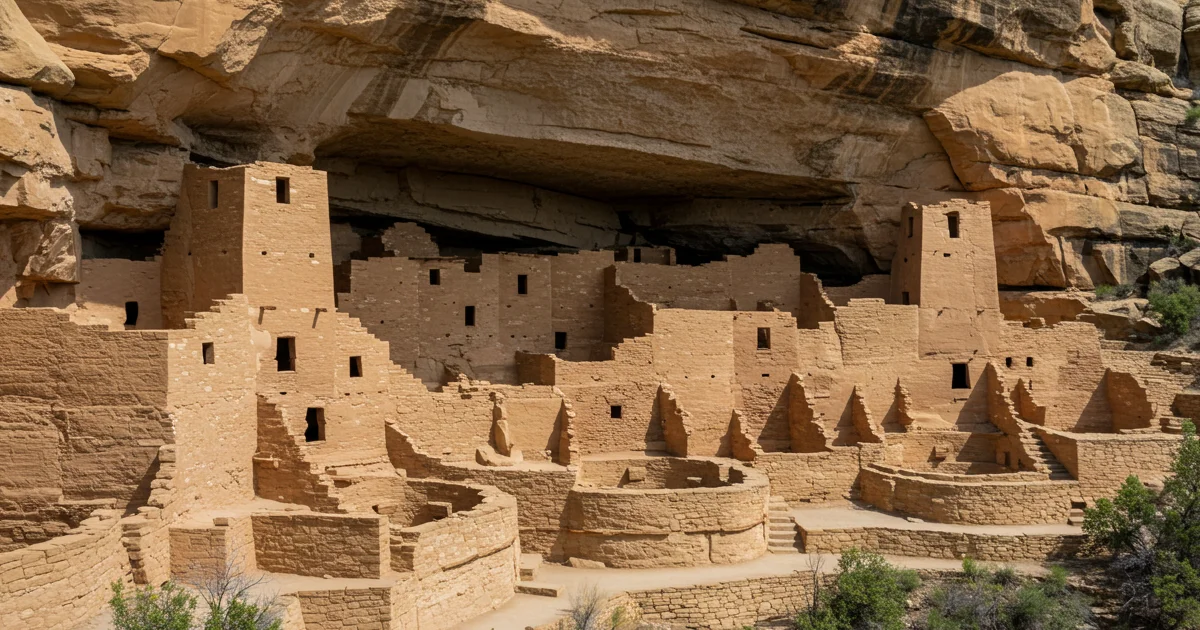
Dwellings within the Stone
Mesa Verde preserves an unparalleled architectural archive of Ancestral Puebloan residential layouts, primarily dating from the 6th to the late 13th centuries. These remarkable cliff dwellings, such as the iconic Cliff Palace and Balcony House, are ingeniously constructed within massive, naturally occurring sandstone alcoves high on canyon walls. Utilizing local sandstone blocks, mud mortar, and timber, the Ancestral Puebloans engineered multi-story structures with intricate room blocks, kivas, and defensive features, demonstrating sophisticated masonry and an advanced adaptation to the arid, rugged environment.
The construction and eventual abandonment of these settlements by the Ancestral Puebloans around 1300 CE remain subjects of intense archaeological study, with theories ranging from prolonged drought to resource depletion and social upheaval. Mesa Verde's significance extends beyond its architectural ingenuity, offering profound insights into the social organization, spiritual practices, and daily lives of its ancient inhabitants. As a UNESCO World Heritage site and National Park, it serves as a critical center for archaeological research, cultural preservation, and public education, safeguarding a vital chapter of North American indigenous history.
Attributes
| Year Inscribed | 1978 |
|---|---|
| Property Area | 21043 ha |
| Buffer Zone | 0 ha |
| UNESCO ID | 27 |
| Category Type | Cultural |
| Primary Material | Sandstone & Mortar |
| Epoch Origin | Puebloan Prehistory (12th C. CE) |
| Conservation Status | Excellent |
| Annual Visitors | 550000 people |