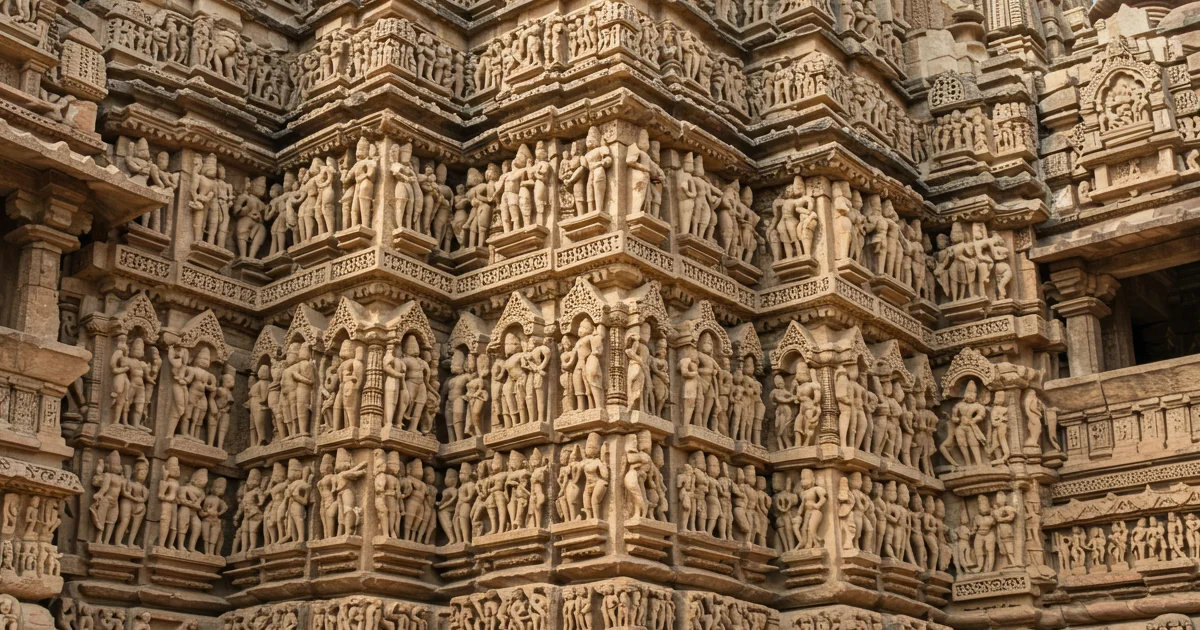
Pinnacle of Nagara Architecture
The Khajuraho Group of Monuments, constructed by the Chandela dynasty between 950 and 1050 CE, exemplifies the zenith of Nagara-style temple architecture in Central India. Originally comprising over 85 temples, approximately 25 survive today, spread across Western, Eastern, and Southern groups. These structures are typically built on high platforms (jagati) and feature a series of interconnected halls (mandapas) leading to the sanctum (garbhagriha), all crowned by a curvilinear spire (sikhara) that evokes the sacred peaks of the Himalayas.
The temples are renowned for their intricate and expressive stone carvings, which adorn both interior and exterior surfaces. These sculptures depict a diverse range of themes, including deities, mythical creatures, daily life, musicians, dancers, and the famous erotic mithuna scenes, often interpreted as symbolic representations of spiritual union and the celebration of life. This unique blend of religious iconography and secular imagery, executed with remarkable artistic skill, has earned Khajuraho its status as a UNESCO World Heritage site, preserving a profound cultural legacy of medieval India.
Attributes
| Year Inscribed | 1986 |
|---|---|
| Property Area | 21 ha |
| Buffer Zone | 0 ha |
| UNESCO ID | 240 |
| Category Type | Cultural |
| Primary Material | Buff Sandstone Masonry |
| Epoch Origin | Chandela Rajput Era (10th C.) |
| Conservation Status | Active Monitoring |
| Annual Visitors | 1.5 million |