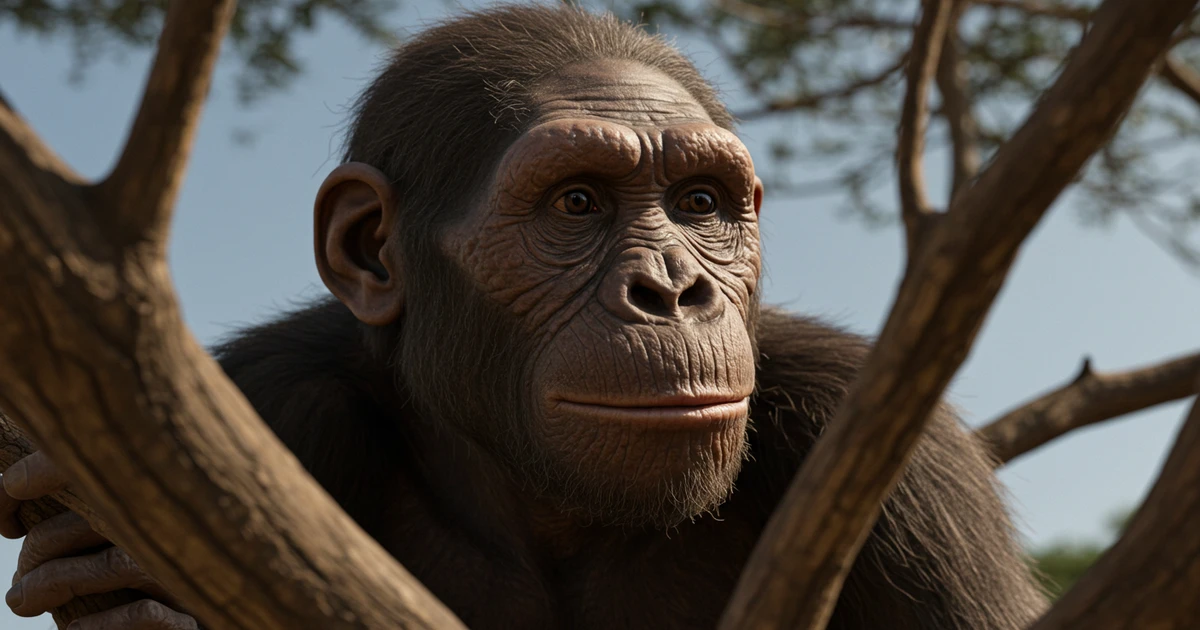
Kenyanthropus platyops
Discovered in 1999 by a team led by Meave Leakey at Lomekwi, near Lake Turkana in Kenya, Kenyanthropus platyops introduced a new level of complexity to the Pliocene hominin fossil record. The species is primarily known from the type specimen, a crushed but relatively complete cranium designated KNM-WT 40000. Its most defining characteristic is a remarkably broad and flat (orthognathic) facial skeleton, combined with small molar teeth. This morphology contrasts sharply with the more projecting (prognathic) faces of its contemporaries, such as Australopithecus afarensis. This unique combination of a derived, modern-looking facial structure with a primitive, small cranial capacity challenges linear models of human evolution, suggesting multiple hominin lineages coexisted and experimented with different adaptive strategies.
The name Kenyanthropus platyops translates to "flat-faced man from Kenya," underscoring its key anatomical feature. Its existence demonstrates that hominin diversity during the mid-Pliocene was greater than previously understood, supporting a model of a "bushy" evolutionary tree rather than a single, linear progression. The primary debate surrounding this species is its validity as a distinct genus. Some paleoanthropologists argue it represents a separate evolutionary branch, potentially more closely related to the genus Homo than the australopiths are. Others contend that the flatness of the KNM-WT 40000 cranium is an artifact of post-mortem distortion and that the specimen should be classified within Australopithecus. The lack of associated postcranial remains makes its locomotion and body plan speculative.
Attributes
| Year Discovered | 1999 |
|---|---|
| Cranial Capacity | 400 cc |
| Estimated Stature | Unknown (no postcranial fossils) m |
| Type Specimen | KNM-WT 40000 |
| Evolutionary Group | Australopith |
| Associated Tools | None (Lomekwian tools found in same region but not directly associated) |
| Chronological Range | 3.5 - 3.2 Mya Mya |
| Extinction Context | Disappears from the fossil record around 3.2 Mya; reasons unknown but likely involved environmental change and/or competition with other hominins. |
| Fossil Abundance | Extremely rare; one cranium and minor fragments |