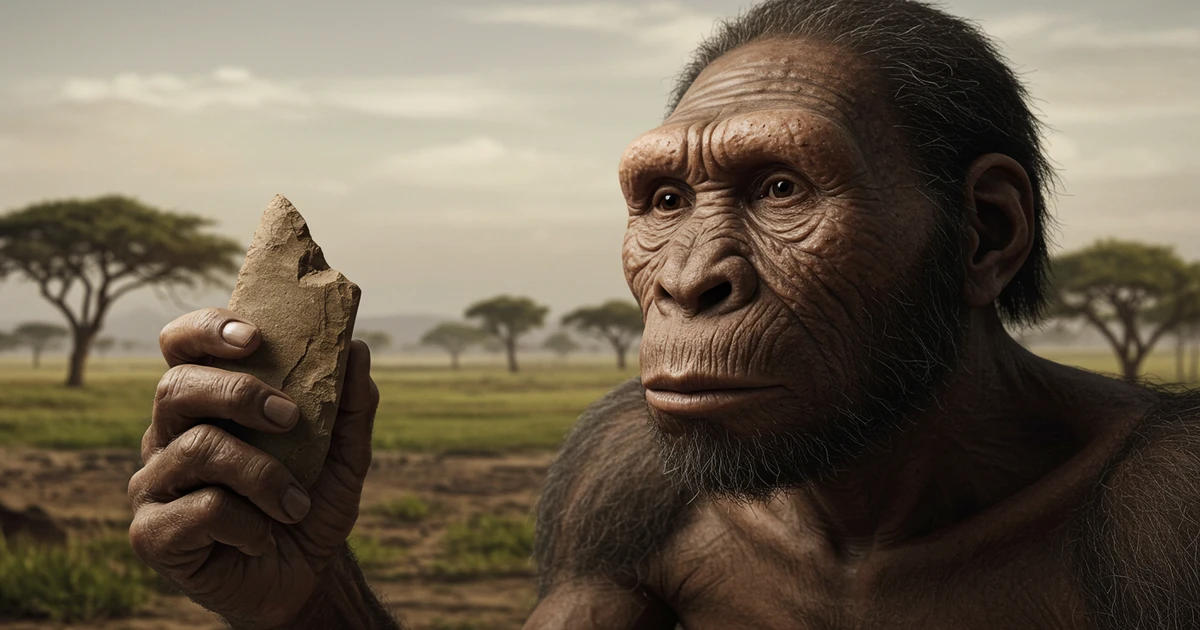
Homo rudolfensis
Homo rudolfensis is a species defined primarily by the fossil cranium KNM-ER 1470, discovered in 1972 by Bernard Ngeneo, a member of Richard Leakey's team, at Koobi Fora, Kenya. Initially, this specimen was attributed to Homo habilis, but its unique combination of features led Soviet anthropologist Valerii Alexeev to propose a new species name in 1986. The defining characteristics of H. rudolfensis include a large cranial capacity (around 775 cc for the type specimen), which is substantially greater than that of australopithecines and on the high end for H. habilis. Morphologically, the skull displays a surprisingly modern facial structure: it is relatively flat and broad with a less projecting (orthognathic) profile and lacks the prominent brow ridges seen in many other early hominins. This mosaic of a large brain and a less ape-like face has fueled ongoing debate about its precise phylogenetic position and its relationship to other early Homo species. The postcranial skeleton of Homo rudolfensis is poorly known, as very few limb bones have been confidently assigned to the species, making definitive statements about its body size, proportions, and locomotion challenging. However, like all members of the genus Homo, it was an obligate biped. The large size of its molars and premolars suggests a powerful chewing apparatus, possibly adapted for a varied diet that may have included tough plant materials, though it was likely a generalized omnivore. Living between approximately 2.4 and 1.8 million years ago, H. rudolfensis was a contemporary of H. habilis and Paranthropus boisei, indicating a period of significant hominin diversity in East Africa. While no stone tools have been found in direct, indisputable association, its brain size and temporal placement make it a strong candidate for being a manufacturer of Oldowan tools.
Attributes
| Year Discovered | 1972 |
|---|---|
| Cranial Capacity | 700 cc |
| Estimated Stature | 1.5 m |
| Type Specimen | KNM-ER 1470 |
| Evolutionary Group | Genus Homo |
| Associated Tools | Oldowan (inferred) |
| Chronological Range | 2.4 - 1.8 Mya Mya |
| Extinction Context | Disappeared from the fossil record; likely outcompeted by other hominins or unable to adapt to environmental changes. |