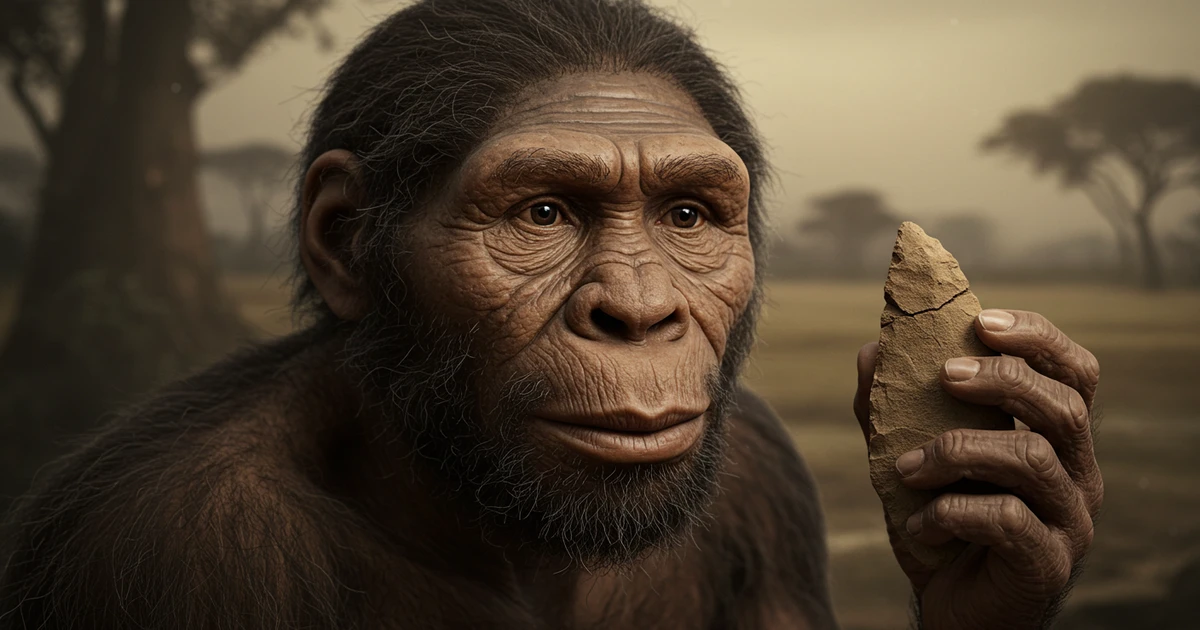
The "Handy Man"
Homo habilis was first discovered in the early 1960s by Mary and Louis Leakey at Olduvai Gorge in Tanzania, a discovery that reshaped our understanding of human origins. Anatomically, H. habilis represents a mosaic of primitive and derived traits. It possessed a larger cranial capacity than its australopithecine predecessors, averaging between 550 and 700 cubic centimeters, indicating significant brain expansion. Its dentition also showed a reduction in the size of molars and premolars, suggesting a dietary shift. However, it retained some ape-like features, including relatively long arms and a moderately prognathic (projecting) face. This combination of traits has fueled ongoing debate, with some paleoanthropologists arguing its placement within the genus Homo, while others suggest it might be better classified as a late, large-brained Australopithecus. Regardless, H. habilis is a critical transitional figure, bridging the gap between earlier hominins and more advanced species like Homo erectus.
The defining characteristic of Homo habilis is its association with the Oldowan stone tool industry, the earliest known widespread tool-making tradition. These simple but effective tools, including core choppers and sharp flakes, signify a major cognitive and behavioral leap. The ability to create and use tools allowed H. habilis to exploit new food resources, particularly meat and marrow from animal carcasses. Abundant fossil evidence, including animal bones with distinct cut marks found alongside H. habilis remains, points to a diet that included scavenged or perhaps hunted animal protein, supplementing a base of plant foods. This dietary flexibility was a key adaptation to the fluctuating environments of the Pliocene-Pleistocene African savanna. Living in small social groups, these hominins likely used cooperation and their newfound technology to survive and thrive in a landscape filled with formidable predators.
Attributes
| Year Discovered | 1960 |
|---|---|
| Cranial Capacity | 550 cc |
| Estimated Stature | 1 m |
| Type Specimen | OH 7 |
| Evolutionary Group | Genus Homo |
| Associated Tools | Oldowan |
| Chronological Range | 2.4 - 1.4 Mya Mya |
| Extinction Context | Likely outcompeted and replaced by the larger-brained, more adaptable Homo erectus. |