Historic Centre of Florence
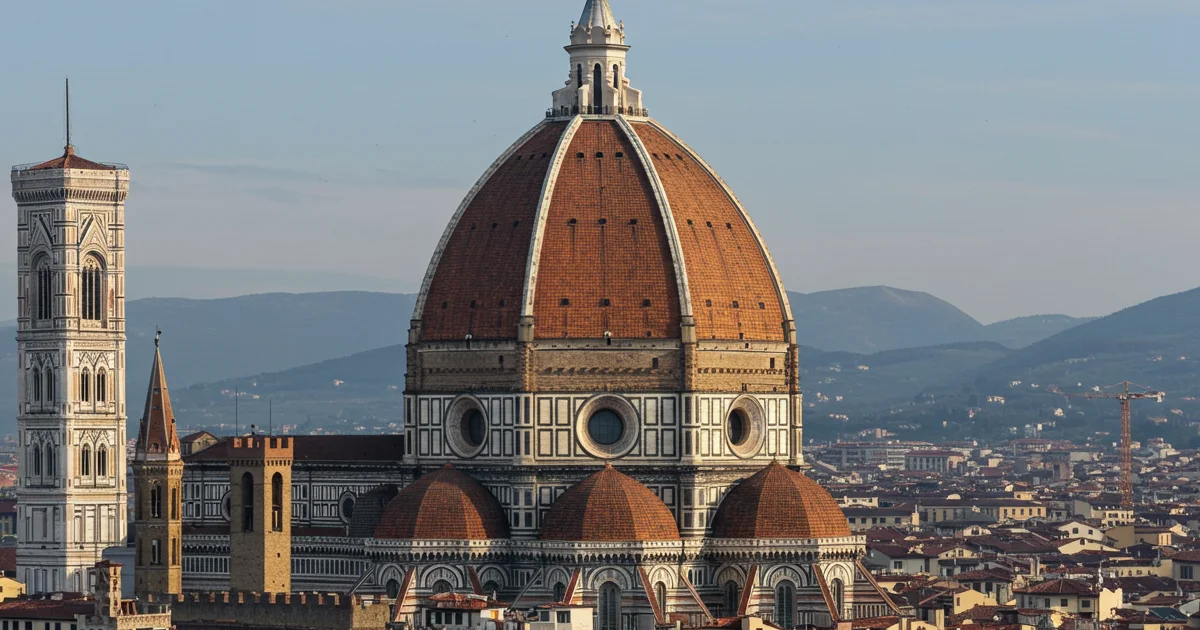
The Historic Centre of Florence, inscribed as a UNESCO World Heritage site, stands as the quintessential cradle of the Renaissance, embodying the artistic and architectural innovations that defined the era. At its heart lies the magnificent Cattedrale di Santa Maria del Fiore, crowned by Filippo Brunelleschi's revolutionary dome, an engineering marvel completed in 1436. This double-shelled, self-supporting brick structure, spanning approximately 45 meters (148 feet) in diameter and rising over 114 meters (375 feet) to its lantern, remains the largest masonry dome ever built. Adjacent to the Duomo are the octagonal Baptistery of St. John, renowned for Ghiberti's "Gates of Paradise," and Giotto's Campanile, a slender, polychrome bell tower exemplifying Florentine Gothic architecture.
Beyond these iconic landmarks, the urban fabric of Florence showcases a harmonious blend of medieval and Renaissance planning, reflecting the city's profound cultural and economic prosperity. Key structures include the Palazzo Vecchio, the Uffizi Gallery housing unparalleled Renaissance art, and the Ponte Vecchio, a medieval bridge lined with shops. The city's grid-like layout, punctuated by grand piazzas and palaces like the Palazzo Pitti and Palazzo Medici Riccardi, demonstrates a conscious application of humanistic principles in urban design. This concentration of masterpieces, from sculpture and painting to architecture and urban planning, collectively forms an unparalleled testament to the creative genius of the Renaissance.
Attributes
| Year Inscribed | 1982 |
|---|---|
| Property Area | 505 ha |
| Buffer Zone | 10480 ha |
| UNESCO ID | 174 |
| Category Type | Cultural |
| Primary Material | Pietra Serena & Brick |
| Epoch Origin | Renaissance Revival (14th C.) |
| Conservation Status | Excellent |
| Annual Visitors | 16 million |