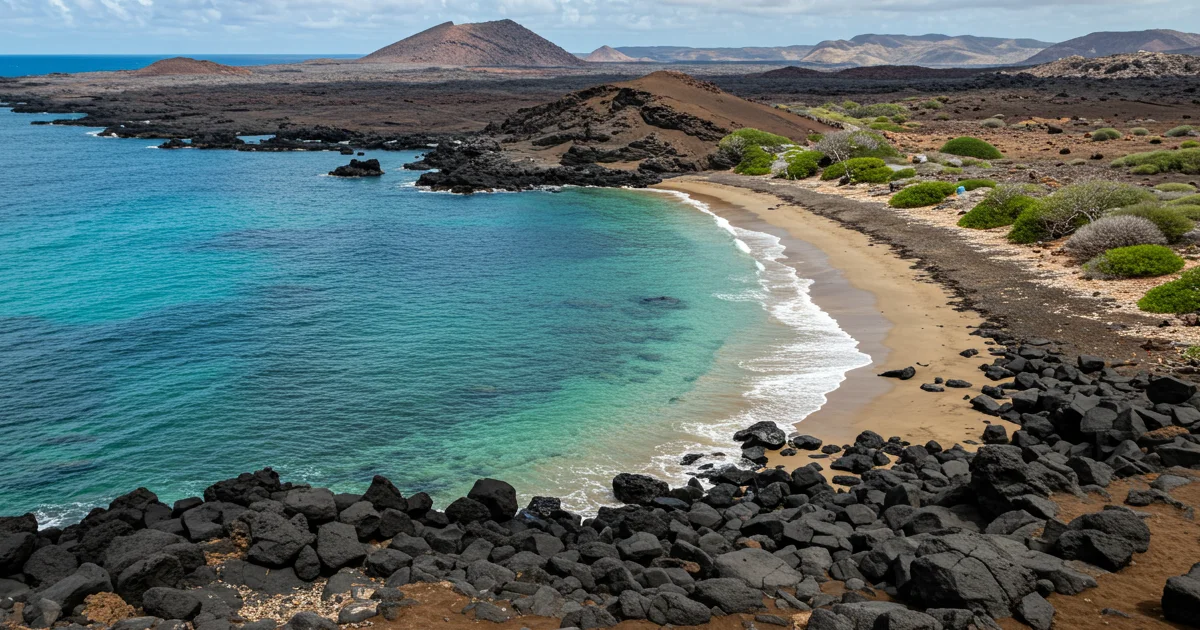
The Living Museum of Evolution
The Galápagos Islands, an archipelago of volcanic origin situated approximately 1,000 kilometers off the coast of Ecuador, are a geological marvel formed by a hotspot plume. This isolation, combined with the confluence of three major ocean currents—the Humboldt, Cromwell, and Panama currents—creates a unique and dynamic marine and terrestrial environment. The islands' relatively young age, with the oldest islands dating back around 4 million years, has allowed for rapid speciation and adaptive radiation, making them a prime natural laboratory for studying evolutionary processes. Their rugged landscapes, ranging from barren lava fields to lush highlands, support distinct ecosystems across the different islands.
This extraordinary biodiversity, featuring a high degree of endemism, profoundly influenced Charles Darwin during his 1835 voyage aboard HMS Beagle, leading to his groundbreaking theory of natural selection. Iconic species such as the Galápagos giant tortoise, marine iguana, flightless cormorant, and Darwin's finches exhibit remarkable adaptations to their specific island environments. Today, the Galápagos remain a critical site for scientific research, conservation efforts, and ecotourism, continuously offering insights into evolution, biogeography, and the delicate balance of island ecosystems, while facing challenges from invasive species and climate change.
Attributes
| Year Inscribed | 1978 |
|---|---|
| Property Area | 14066514 ha |
| Buffer Zone | 0 ha |
| UNESCO ID | 1 |
| Category Type | Natural |
| Primary Material | Volcanic Basalt |
| Epoch Origin | Late Neogene Epoch (Formation) |
| Conservation Status | Active Monitoring |
| Annual Visitors | 270000 people |