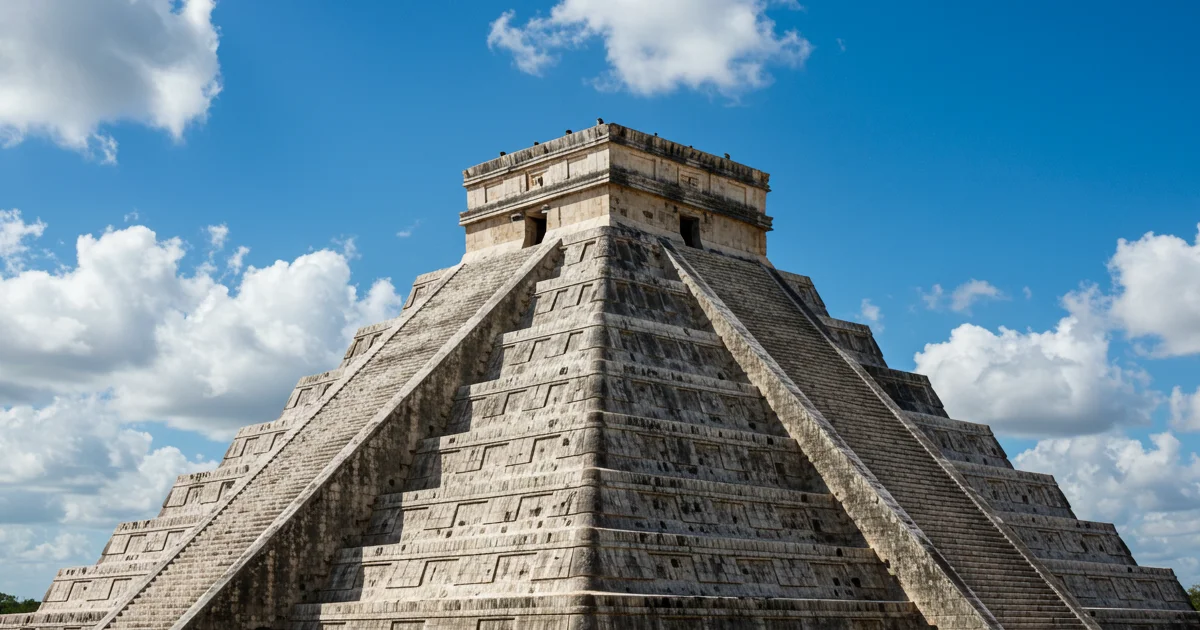
Triumph of Mesoamerican Astronomy
Chichen Itza stands as an elite monument of Maya-Toltec architectural fusion, showcasing profound astronomical knowledge and engineering prowess. The site's most iconic structure, El Castillo (Temple of Kukulkan), is a 30-meter (98-foot) tall step-pyramid with 9 terraces and four stairways, each containing 91 steps, totaling 364 steps. Including the platform at the top, this sums to 365, representing the days of the solar year. During the spring and autumn equinoxes, the sun's shadow creates the illusion of a serpent descending the northern staircase, culminating in a stone serpent head at its base, a testament to the ancient Maya's precise understanding of celestial mechanics.
Beyond El Castillo, the site encompasses the largest Mesoamerican ballcourt, measuring 168 meters (551 feet) long and 70 meters (230 feet) wide, where ritualistic games were played. The circular observatory, El Caracol, is a unique structure in Maya architecture, featuring a spiral staircase and precisely aligned windows used to track celestial events, particularly the movements of Venus. The Temple of the Warriors, with its hundreds of carved columns and a Chac Mool statue, further exemplifies the blend of Maya and Toltec artistic and religious traditions, solidifying Chichen Itza's status as a pivotal cultural and historical landmark.
Attributes
| Year Inscribed | 1988 |
|---|---|
| Property Area | 300 ha |
| Buffer Zone | 0 ha |
| UNESCO ID | 483 |
| Category Type | Cultural |
| Primary Material | Limestone Ashlar Blocks |
| Epoch Origin | Late Classic Maya (8th C. CE) |
| Conservation Status | Active Monitoring |
| Annual Visitors | 2.5 million |