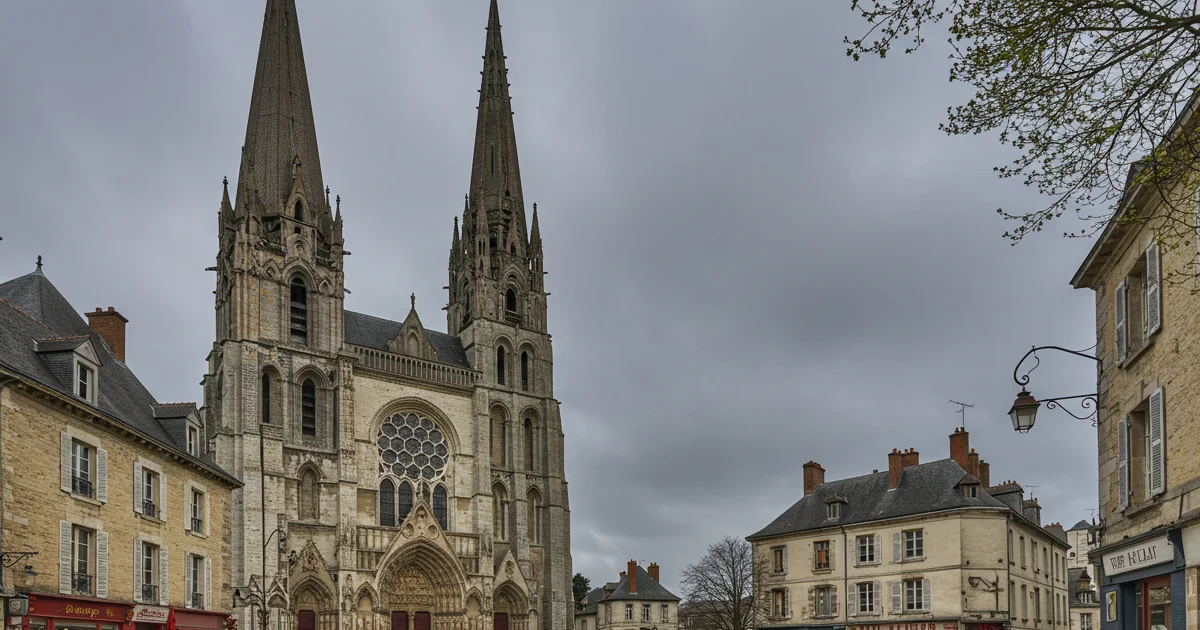
Pinnacle of High Gothic Design
Chartres Cathedral stands as the quintessential embodiment of French High Gothic architecture, largely constructed between 1194 and 1220. Its innovative structural system, featuring massive flying buttresses and soaring ribbed vaults, allowed for unprecedented wall openings, which are filled with an almost entirely preserved collection of 12th and 13th-century stained-glass windows. This architectural integrity, having escaped significant alterations since its completion, offers an unparalleled insight into the aesthetic and engineering prowess of the period.
Beyond its structural innovations, the cathedral is renowned for its sculptural programs, particularly the Royal Portal on the west facade, dating from the mid-12th century, which showcases early Gothic sculpture. Inside, the famous labyrinth embedded in the nave floor, a medieval path for penitents, and the relic of the Sancta Camisa (the tunic believed to have been worn by the Virgin Mary at Christ's birth) underscore its profound historical role as a major pilgrimage destination. Its influence extended across Europe, shaping the development of Gothic cathedrals for centuries.
Attributes
| Year Inscribed | 1979 |
|---|---|
| Property Area | 1 ha |
| Buffer Zone | 64 ha |
| UNESCO ID | 81 |
| Category Type | Cultural |
| Primary Material | Chérence Limestone |
| Epoch Origin | High Middle Ages (12th C.) |
| Conservation Status | Excellent |
| Annual Visitors | 1.5 million |