Masterpiece of Earthen Architecture
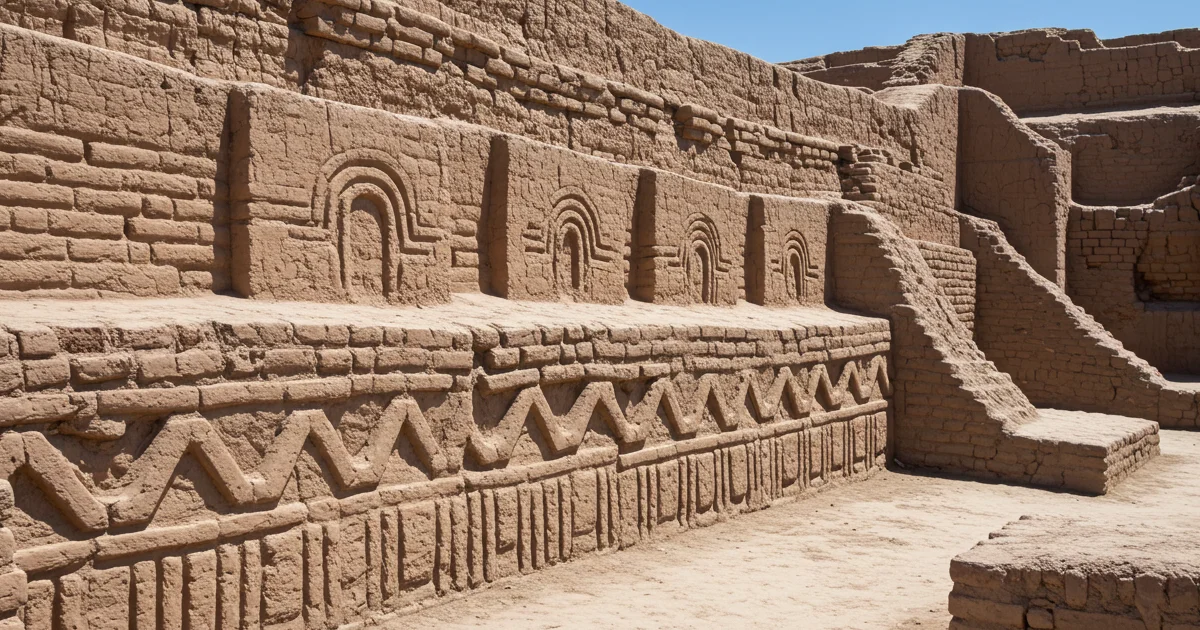
Chan Chan, the sprawling capital of the Chimor kingdom, represents the largest pre-Columbian city in South America and the world's most extensive adobe city. Flourishing between approximately 900 AD and 1470 AD, its urban core spans about 6 square kilometers and is characterized by nine monumental, rectangular walled compounds known as ciudadelas. Each ciudadela served as a self-contained administrative, residential, and funerary complex for a Chimú ruler, featuring intricate courtyards, temples, storehouses, and burial platforms, all meticulously constructed from sun-dried mud bricks and adorned with elaborate friezes depicting marine life and geometric motifs.
The city's sophisticated urban planning is evident in its hierarchical layout and advanced hydraulic engineering. A complex network of canals and aqueducts, some extending for many kilometers, diverted water from the Moche River to sustain agricultural fields and supply the city's inhabitants, demonstrating remarkable mastery over arid coastal environments. Despite its grandeur, Chan Chan was conquered by the Inca Empire around 1470 AD, leading to its gradual decline. Today, it stands as a poignant testament to the Chimú civilization's architectural prowess and complex societal structure, offering invaluable insights into pre-Columbian Andean urbanism and cultural heritage.
Attributes
| Year Inscribed | 1986 |
|---|---|
| Property Area | 1414 ha |
| Buffer Zone | 2953 ha |
| UNESCO ID | 366 |
| Category Type | Cultural |
| Primary Material | Sundried Adobe Mudbrick |
| Epoch Origin | Intermediate Horizon Era (9th C. CE) |
| Conservation Status | Active Monitoring |
| Annual Visitors | 150000 people |