Anatomical and Chronological Context
Australopithecus garhi was first identified from fossils discovered in 1997 by a research team led by Berhane Asfaw and Tim White in the Bouri Formation of Ethiopia's Middle Awash region. The species, dated precisely to 2.5 million years ago, is primarily known from the partial cranium BOU-VP-12/130. This specimen exhibits a unique mosaic of features, including a small cranial capacity of approximately 450 cc, a highly prognathic (projecting) lower face, and exceptionally large post-canine teeth, even larger than those of robust australopiths. However, its dental arcade shape is more parabolic, like Homo. Postcranial remains found nearby, though not definitively assigned to the same individual, suggest long, human-like femurs combined with long, ape-like forearms, indicating a form of bipedalism different from modern humans.
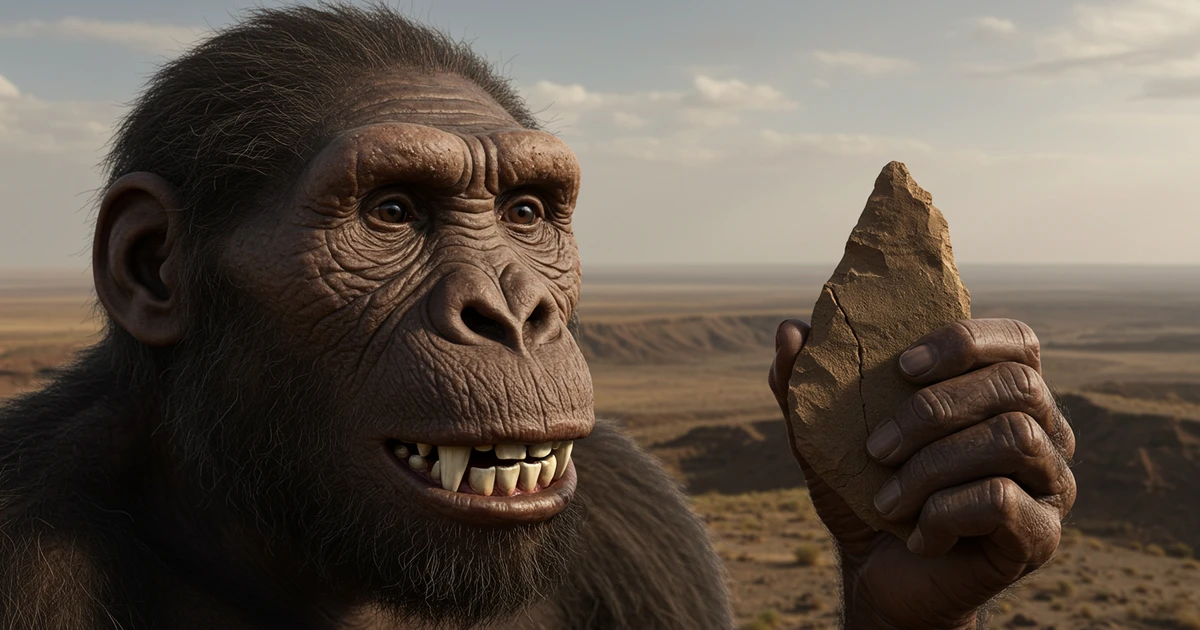
The most profound significance of A. garhi lies in its potential behavioral innovations. Found in the same geological layers were animal bones (antelope and horse) bearing distinct cut marks and percussion fractures from stone tools, representing the earliest strong evidence for systematic butchery of large mammals. While no stone tools were found in direct association with the A. garhi fossils, the circumstantial evidence is compelling, suggesting this species was a tool user. This discovery challenged the long-held principle that the genus Homo were the first stone tool makers and consumers of meat and marrow. A. garhi is therefore considered a strong candidate for the direct ancestor of the *Homo lineage, bridging the gap between earlier australopiths and Homo habilis.
Attributes
| Year Discovered | 1997 |
|---|---|
| Cranial Capacity | 450 cc |
| Estimated Stature | 1.4 m |
| Type Specimen | BOU-VP-12/130 |
| Evolutionary Group | Australopith |
| Associated Tools | Oldowan-like (butchered bones associated, no stone tools directly recovered) |
| Chronological Range | 2.5 Mya Mya |
| Extinction Context | Likely outcompeted by or evolved into early Homo species; known only from a narrow time window. |