Overview
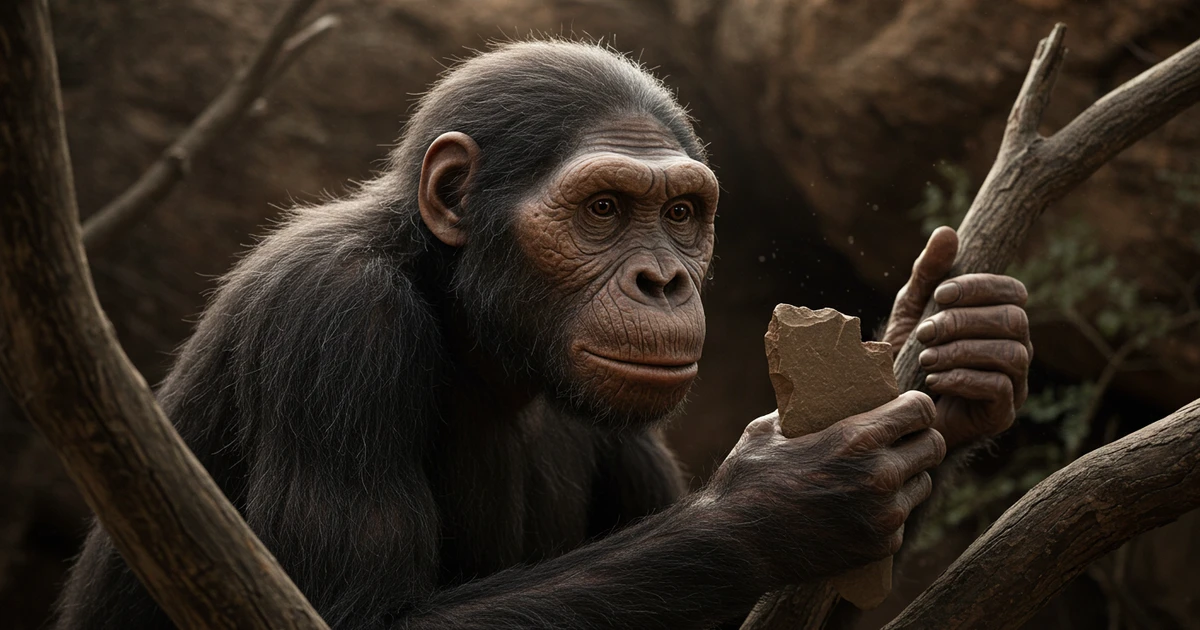
Australopithecus africanus represents a critical chapter in human evolution, first brought to light by Raymond Dart's 1924 discovery of the "Taung Child" skull in South Africa. This species, a gracile australopithecine, is primarily known from cave deposits at Sterkfontein, Makapansgat, and Taung. Morphologically, A. africanus presents a mosaic of primitive and derived traits. It possessed a more globular cranium and smaller, less-projecting canines compared to its East African contemporary, A. afarensis, suggesting a slight shift in diet or social structure. Despite these more human-like cranial features, its postcranial skeleton, including long arms and curved finger bones, indicates significant arboreal capabilities, suggesting a life spent both in trees and on the ground. Evidence for bipedalism is robust, confirmed by the anteriorly positioned foramen magnum and the structure of the pelvis and lower limbs.
Living between approximately 3.3 and 2.1 million years ago, A. africanus inhabited a mosaic of woodland and savanna environments. Isotopic analysis of tooth enamel reveals a highly varied diet, more diverse than many other early hominins, incorporating C3 resources like fruits and leaves as well as C4 resources such as grasses and sedges. This dietary flexibility may have been a key adaptation to its changing environment. No stone tools have been definitively associated with A. africanus, placing it behaviorally before the advent of Oldowan technology. Its evolutionary position remains debated; it is considered either a direct ancestor to the genus Homo or a side branch that ultimately went extinct without issue, possibly due to increasing climatic instability and competition from emerging Paranthropus and early Homo species.
Attributes
| Year Discovered | 1924 |
|---|---|
| Cranial Capacity | 428 cc |
| Estimated Stature | 1.1 m |
| Type Specimen | Taung Child |
| Evolutionary Group | Australopith |
| Associated Tools | None |
| Chronological Range | 3.3 - 2.1 Mya Mya |
| Extinction Context | Extinction around 2.1 Mya, likely due to climate change and competition from early Homo and Paranthropus. |