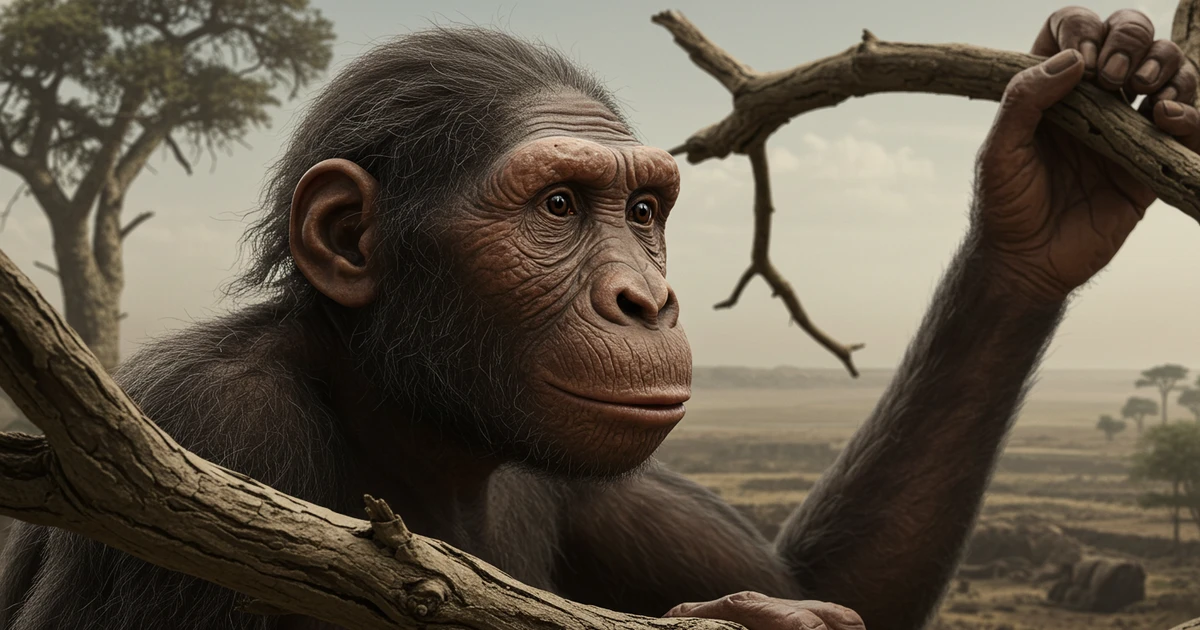
A Mosaic of Traits
Ardipithecus ramidus represents a pivotal, early stage of human evolution, with the first fossils discovered in 1992 at Aramis in the Middle Awash region of Ethiopia by a team led by Tim White. The most significant find, the partial skeleton ARA-VP-6/500 nicknamed "Ardi," revealed a surprising mosaic of primitive and derived characteristics. While its pelvis and lower limbs show adaptations for facultative bipedalism on the ground, its feet retained a divergent, grasping big toe (hallux), indicating significant time spent climbing in trees. This combination challenges earlier models that posited a savanna-driven origin for upright walking. Its skull, with a small cranial capacity of 300-350 cc, housed a brain similar in size to a female chimpanzee's, but its facial projection was less pronounced than in modern apes.
The paleoecological context of Ar. ramidus is as revolutionary as its anatomy. Fossil evidence indicates it inhabited a woodland environment, not the open savanna biome long hypothesized as the cradle of bipedalism. This finding forced a major re-evaluation of the selective pressures that led to upright walking. The species' diet, inferred from its relatively small molars and thin enamel, likely consisted of fruits, nuts, and other forest foods, contrasting with the tougher, more abrasive diet of many later australopithecines. Furthermore, the reduced size of the male canines and the lack of a canine-premolar honing complex suggest a social structure with diminished male-to-male aggression, potentially pointing towards different mating and social systems than those seen in chimpanzees.
Attributes
| Year Discovered | 1992 |
|---|---|
| Cranial Capacity | 300 cc |
| Estimated Stature | 1.2 m |
| Type Specimen | ARA-VP-6/500 (Ardi) |
| Evolutionary Group | Early Hominin |
| Associated Tools | None |
| Chronological Range | 4.4 Mya Mya |
| Extinction Context | Extinction likely due to environmental change and/or competition from emerging Australopithecus species. |