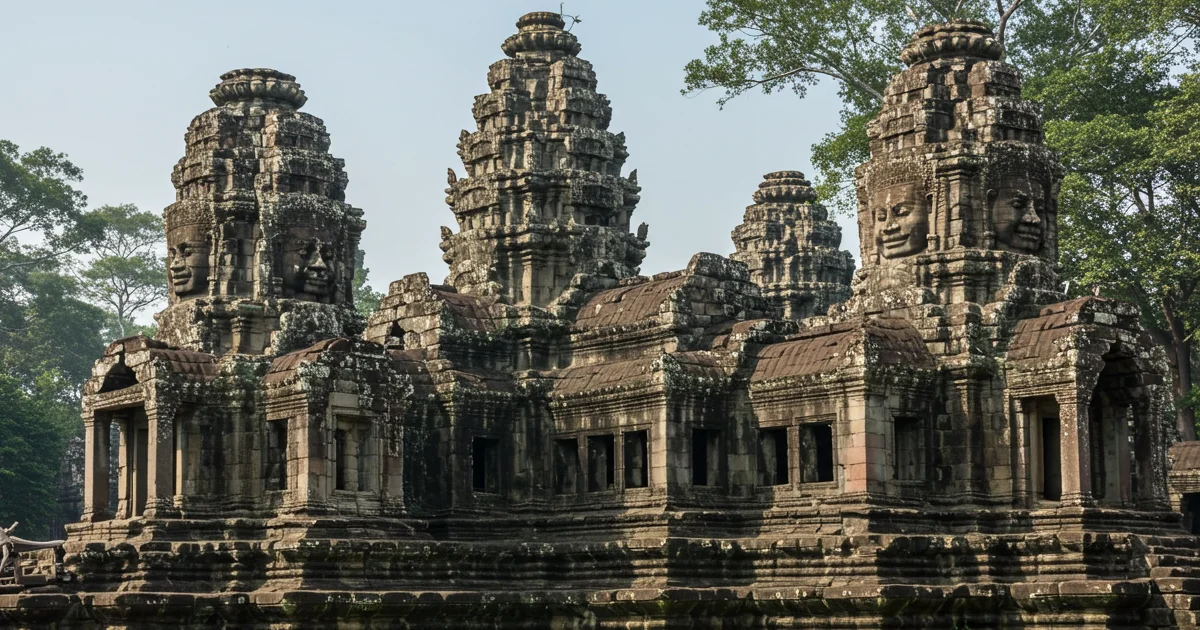
Architectural Marvel of the Khmer Empire
Angkor Wat, a sprawling temple complex covering approximately 200 hectares, stands as the largest religious monument in the world and the pinnacle of Khmer architecture. Constructed in the early 12th century by King Suryavarman II, it was originally dedicated to the Hindu god Vishnu. The temple's design is a sophisticated representation of Mount Meru, the home of the devas in Hindu mythology, featuring five prominent lotus-like towers, with the central tower rising 65 meters above the ground. It is enclosed by a 3.6-kilometer-long outer wall and a 190-meter-wide moat, symbolizing the cosmic ocean.
The temple is renowned for its extensive and intricate bas-reliefs, which adorn the walls of its galleries, depicting Hindu epics such as the Ramayana and Mahabharata, as well as historical scenes of the Khmer Empire. These carvings, stretching over 1,200 square meters, offer invaluable insights into ancient Khmer life, warfare, and religious beliefs. Angkor Wat's transition from a Hindu temple to a Buddhist site in the late 13th century reflects the evolving religious landscape of the region, with many Hindu deities later replaced or supplemented by Buddhist imagery, solidifying its enduring cultural and spiritual significance for Cambodia.
Attributes
| Year Inscribed | 1992 |
|---|---|
| Property Area | 40100 ha |
| Buffer Zone | 0 ha |
| UNESCO ID | 668 |
| Category Type | Cultural |
| Primary Material | Sandstone & Laterite |
| Epoch Origin | Khmer Empire (12th C.) |
| Conservation Status | Active Monitoring |
| Annual Visitors | 2.5 million |