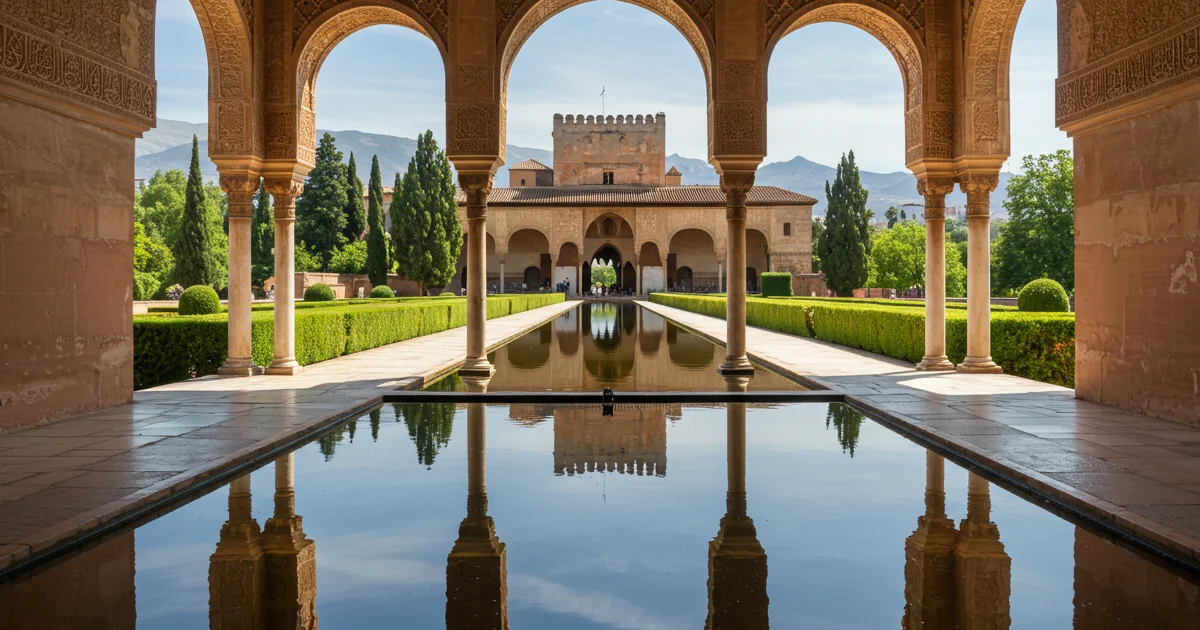
The Red Fortress and Generalife Gardens
Rising majestically above the city of Granada, the Alhambra is a sprawling palatine city and fortress complex, serving as the royal residence and court of the Nasrid rulers of the Emirate of Granada from the 13th to the 15th centuries. Its strategic location on Sabika hill provided both defensive advantages and panoramic views. The complex is renowned for its sophisticated water systems, intricate stucco work, and the harmonious integration of architecture with lush gardens, particularly within the Generalife, the summer palace and country estate of the Nasrid sultans, characterized by its tranquil patios, fountains, and orchards.
The architectural brilliance of the Alhambra is exemplified by its distinct palaces, including the Comares Palace with its imposing Torre de Comares and the Hall of the Ambassadors, and the Palace of the Lions, famous for its central fountain supported by twelve marble lions and surrounded by delicate arcades. These structures showcase the zenith of Moorish art through their elaborate muqarnas (stalactite vaulting), geometric azulejo (tilework), and calligraphic inscriptions, reflecting a profound blend of Islamic artistic principles and Andalusian craftsmanship. The site stands as a testament to the cultural sophistication of Al-Andalus and its lasting influence on Western art and architecture.
Attributes
| Year Inscribed | 1984 |
|---|---|
| Property Area | 105 ha |
| Buffer Zone | 0 ha |
| UNESCO ID | 312 |
| Category Type | Cultural |
| Primary Material | Red Tapia & Brick |
| Epoch Origin | Middle Ages (13th C.) |
| Conservation Status | Excellent |
| Annual Visitors | 2.7 million |