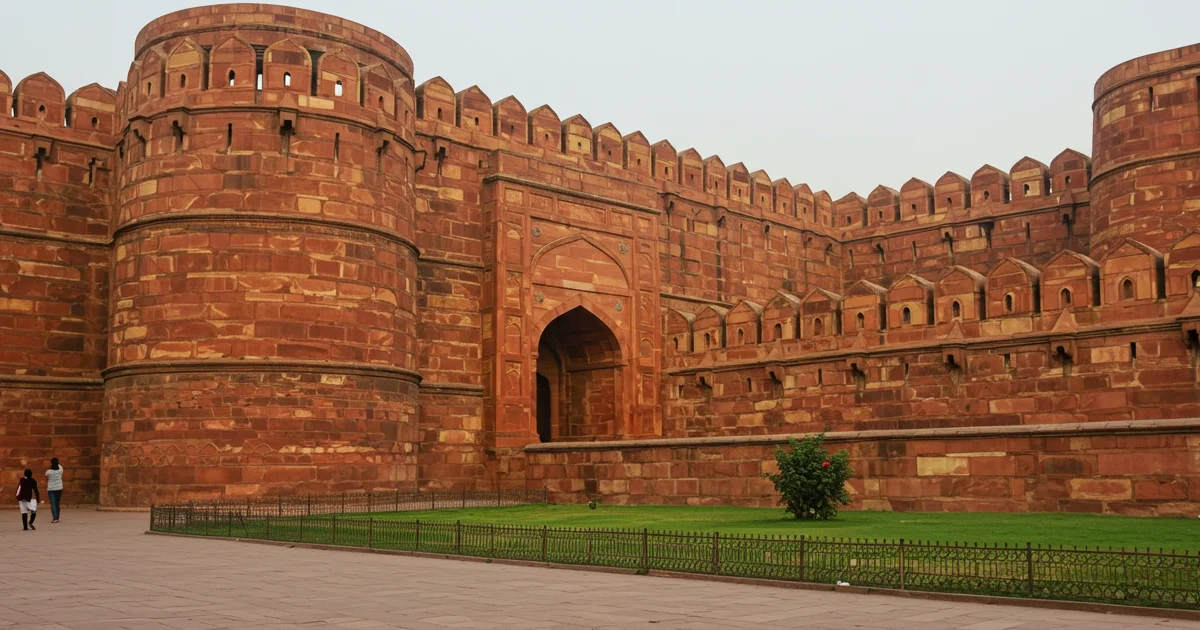
Seat of the Timurid Empire
Agra Fort, a UNESCO World Heritage site, is a formidable 16th-century Mughal fortress located in Agra, Uttar Pradesh, India. Constructed primarily of red sandstone by Emperor Akbar between 1565 and 1573, its massive double ramparts rise over 20 meters high and extend for 2.5 kilometers, enclosing a complex of palaces, mosques, and audience halls. Notable structures within include the Jahangir Mahal, a blend of Hindu and Central Asian architectural styles, and the elegant white marble Khas Mahal, built by Shah Jahan, showcasing the evolution of Mughal design from robust sandstone to intricate marble.
Serving as the principal residence of the Mughal emperors until 1638, Agra Fort was the center of Mughal administration and power for generations. It witnessed pivotal historical events, including the reigns of Akbar, Jahangir, and Shah Jahan, who was famously imprisoned here by his son Aurangzeb in the Musamman Burj, overlooking the Taj Mahal. The fort's strategic importance, architectural grandeur, and historical significance make it a profound symbol of India's rich Mughal heritage and a testament to the empire's artistic and military prowess.
Attributes
| Year Inscribed | 1983 |
|---|---|
| Property Area | 38 ha |
| Buffer Zone | 0 ha |
| UNESCO ID | 251 |
| Category Type | Cultural |
| Primary Material | Red Sandstone & Marble |
| Epoch Origin | Mughal Empire Era (16th C.) |
| Conservation Status | Excellent |
| Annual Visitors | 3.5 million |